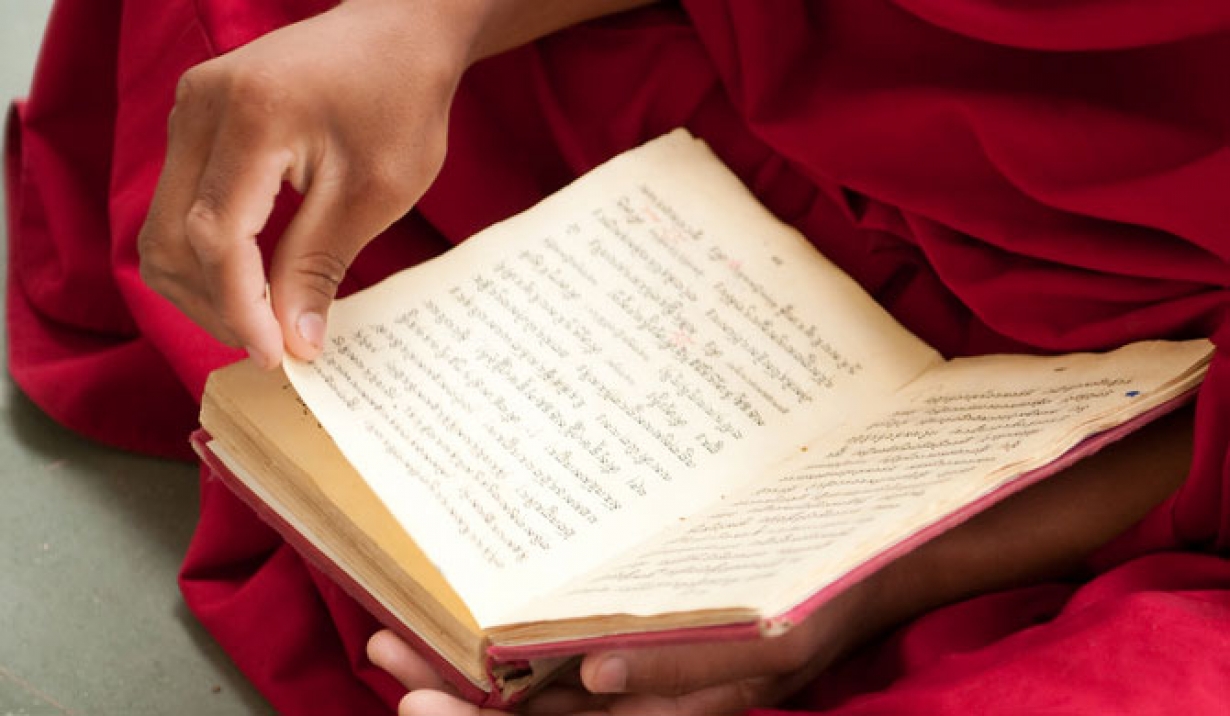
I have chosen the Aṅguttara Nikāya for my first attempt at translation as it's grammar is fairly straightforward and shows the same sentence pattern repeatedly. I publish it here as an aid to other students attempting the same thing.
You can find more of my sutta translation exercises here.
I must stress that I myself am just a student of Pali and make mistakes. For the sake of example, the translations are very literal and of course could be phrased differently.
AccesstoInsight Book of Ones
Michael Olds AN1.1-97
(See also PED lookup tool)
Digital Pāḷi Dictionary
(..) = implied from case/gender/person
[..] = my own addition to ease reading
Ekakanipāta - Book of Ones
Cittapariyādāna - Consuming the Mind
AN 1.1
| evaṃ | me | sutaṃ |
| adv | ins | nom |
| n | ||
| sgl | sgl | |
| pn-1st | ||
| thus | by me | heard, learnt |
| ekaṃ | samayaṃ | bhagavā | sāvatthiyaṃ | viharati | jetavane | anāthapiṇḍikassa | ārāme |
| acc | acc | nom | loc | pr.ind.3rd | loc | gen | loc |
| m | m | m | f | m | m | m | |
| sgl | sgl | sgl | sgl | sgl | sgl | sgl | sgl |
| one | time, occasion | Blessed one | in sāvatthī | abides, sojourns | at jetavana | of anāthapiṇḍika | park |
| tatra | kho | bhagavā | bhikkhū | āmantesi | bhikkhavo'ti | |
| adv | prt | nom | acc | aor.3rd | voc | |
| m | m | m | ||||
| sgl | pl | sgl | pl | |||
| there | (emph) | Blessed one | monks | addressed | monks |
| bhadante'ti | te | bhikkhū | bhagavato | paccassosuṃ | |
| voc | nom | nom | dat | aor.3rd | |
| m | m | m | m | ||
| sgl | pl | pl | sgl | pl | |
| venerable | these; those (dem) | monks | Blessed one | (they) replied (to Dat.) | |
| bhagavā | etad-avoca | |
| nom | aor.3rd | |
| m | ||
| sgl | sgl | |
| Blessed one | this | (he) said |
| na-ahaṃ | bhikkhave | aññaṃ | eka-rūpaṃ-pi | samanupassāmi | |||
| nom | voc | acc | acc | prt | pr.ind.1st | ||
| m | n | n | |||||
| sgl | pl | sgl | sgl | sgl | |||
| not | I | O monks | other | one form | even | sees; regards | |
| yaṃ | evaṃ | purisassa | cittaṃ | pariyādāya | tiṭṭhati |
| acc | adv | gen | acc | absol | pr.ind.3rd |
| n | m | n | |||
| sgl | sgl | sgl | sgl | ||
| which | thus | a man's | mind | having occupied | stands; stays |
| yatha-y-idaṃ | bhikkhave | itthi-rūpaṃ | ||
| nom | voc | nom | ||
| n | m | n | ||
| sgl | pl | sgl | ||
| such as this | monks | female form | ||
| itthi-rūpaṃ | bhikkhave | purisassa | cittaṃ | pariyādāya | tiṭṭhati | ||
| nom | voc | gen | acc | absol | pr.ind.3rd | ||
| n | m | m | n | ||||
| sgl | pl | sgl | sgl | sgl | |||
| female-form | Monks | a man's | mind | having occupied | stands; stays | ||
AN 1.2-5
| na-ahaṃ | bhikkhave | aññaṃ | eka-saddaṃ-pi | samanupassāmi | |||
| nom | voc | acc | acc | prt | pr.ind.1st | ||
| m | n | n | |||||
| sgl | pl | sgl | sgl | sgl | |||
| not | I | O monks | other | one sound | even | sees; regards | |
AN 1.4 taste...
AN 1.5 touch... etc.
AN 1.6
| na-ahaṃ | bhikkhave | aññaṃ | eka-rūpaṃ-pi | samanupassāmi | |||
| nom | voc | acc | acc | prt | pr.ind.1st | ||
| m | n | n | |||||
| sgl | pl | sgl | sgl | sgl | |||
| not | I | O monks | other | one form | even | sees; regards | |
| yaṃ | evaṃ | itthiyā | cittaṃ | pariyādāya | tiṭṭhati |
| acc | adv | gen | acc | absol | pr.ind.3rd |
| n | f | n | |||
| sgl | sgl | sgl | sgl | ||
| which | thus | a woman's | mind | having occupied | stands; stays |
| yatha-y-idaṃ | bhikkhave | purisa-rūpaṃ | ||
| nom | voc | nom | ||
| n | m | n | ||
| sgl | pl | sgl | ||
| such as this | monks | male form | ||
| purisa-rūpaṃ | bhikkhave | itthiyā | cittaṃ | pariyādāya | tiṭṭhati | ||
| nom | voc | gen | acc | absol | pr.ind.3rd | ||
| n | m | f | n | ||||
| sgl | pl | sgl | sgl | sgl | |||
| male-form | Monks | a woman's | mind | having occupied | stands; stays | ||
AN 1.7-10
AN 1.8 scent...
AN 1.9 taste...
AN 1.10 touch... etc.
Nīvaraṇappahāna - Letting go of obstacles
AN 1.11
| na-ahaṃ | bhikkhave | aññaṃ | eka-dhammaṃ-pi | samanupassāmi | |||
| nom | voc | acc | acc | prt | pr.ind.1st | ||
| m | n | n | |||||
| sgl | pl | sgl | sgl | sgl | |||
| not | I | O monks | other | one phenomena | even | sees; regards | |
| yena | anuppanno | vā | kāmacchando | uppajjati |
| adv | nom | prt | nom | pr.ind.3rd |
| m | m | |||
| sgl | sgl | sgl | ||
| by which | un-arisen | or | alluring-desire | arises |
| uppanno | vā | kāmacchando | bhiyyo-bhāvāya | vepullāya | saṃvattati | |
| nom | prt | nom | dat | dat | pr.ind.3rd | |
| m | m | m | n | |||
| sgl | sgl | sgl | sgl | sgl | ||
| arisen | or | alluring-desire | growth | full development | leads (to Dat.) | |
| yatha-y-idaṃ | bhikkhave | subha-nimittaṃ | ||
| nom | voc | nom | ||
| n | m | n | ||
| sgl | pl | sgl | ||
| such as this | monks | marks of beauty | ||
| subha-nimittaṃ | bhikkhave | ayoniso | manasi | karoto |
| nom | voc | adv | loc | gen |
| n | m | n | m | |
| sgl | pl | sgl | sgl | |
| marks of beauty | Monks | carelessly | in mind | acting; |
See discussion of yoniso.
| anuppanno | ca-eva | kāmacchando | uppajjati | |
| nom | prt | nom | pr.ind.3rd | |
| m | m | |||
| sgl | sgl | sgl | ||
| un-arisen | and, even | alluring-desire | arises | |
| uppanno | ca | kāmacchando | bhiyyo-bhāvāya | vepullāya | saṃvattati | |
| nom | prt | nom | dat | dat | pr.ind.3rd | |
| m | m | m | n | |||
| sgl | sgl | sgl | sgl | sgl | ||
| arisen | and | alluring-desire | growth | full development | leads (to Dat.) | |
AN 1.12
| na-ahaṃ | bhikkhave | aññaṃ | eka-dhammaṃ-pi | samanupassāmi | |||
| nom | voc | acc | acc | prt | pr.ind.1st | ||
| m | n | n | |||||
| sgl | pl | sgl | sgl | sgl | |||
| not | I | O monks | other | one phenomena | even | sees; regards | |
| yena | anuppanno | vā | byāpādo | uppajjati |
| adv | nom | prt | nom | pr.ind.3rd |
| m | m | |||
| sgl | sgl | sgl | ||
| by which | un-arisen | or | dislike | arises |
| uppanno | vā | byāpādo | bhiyyo-bhāvāya | vepullāya | saṃvattati | |
| nom | prt | nom | dat | dat | pr.ind.3rd | |
| m | m | m | n | |||
| sgl | sgl | sgl | sgl | sgl | ||
| arisen | or | dislike | growth | full development | leads (to Dat.) | |
| yatha-y-idaṃ | bhikkhave | paṭigha-nimittaṃ | ||
| nom | voc | nom | ||
| n | m | n | ||
| sgl | pl | sgl | ||
| such as this | monks | aggravating features | ||
| paṭigha-nimittaṃ | bhikkhave | ayoniso | manasi | karoto |
| nom | voc | adv | loc | gen |
| n | m | n | m | |
| sgl | pl | sgl | sgl | |
| aggravating features | Monks | carelessly | in mind | acting; |
| anuppanno | ca-eva | byāpādo | uppajjati | |
| nom | nom | pr.ind.3rd | ||
| m | m | |||
| sgl | sgl | sgl | ||
| un-arisen | and, even | dislike | arises | |
| uppanno | ca | byāpādo | bhiyyo-bhāvāya | vepullāya | saṃvattati | |
| nom | prt | nom | dat | dat | pr.ind.3rd | |
| m | m | m | n | |||
| sgl | sgl | sgl | sgl | sgl | ||
| arisen | and | dislike | growth | full development | leads (to Dat.) | |
AN 1.13-15
| na-ahaṃ | bhikkhave | aññaṃ | eka-dhammaṃ-pi | samanupassāmi | |||
| nom | voc | acc | acc | prt | pr.ind.1st | ||
| m | n | n | |||||
| sgl | pl | sgl | sgl | sgl | |||
| not | I | O monks | other | one phenomena | even | sees; regards | |
| yena | anuppanno | vā | thina-middhaṁ | uppajjati |
| adv | nom | prt | nom | pr.ind.3rd |
| m | m | |||
| sgl | sgl | sgl | ||
| by which | un-arisen | or | stiffness & rigidity | arises |
| uppanno | vā | thina-middhaṁ | bhiyyo-bhāvāya | vepullāya | saṃvattati | |
| nom | prt | nom | dat | dat | pr.ind.3rd | |
| m | m | m | n | |||
| sgl | sgl | sgl | sgl | sgl | ||
| arisen | or | stiffness & rigidity | growth | full development | leads (to Dat.) | |
| yatha-y-idaṃ | bhikkhave | arati | tandī | vijambhitā | bhattasammado | cetaso | ca | līnattaṃ | |
| nom | voc | nom | nom | nom | nom | nom | nom | ||
| n | m | f | f | f | m | m | n | ||
| sgl | pl | sgl | sgl | sgl | sgl | sgl | sgl | ||
| such as this | monks | apathy | laziness | yawning | intoxicated by food | mental | & | lethargy | |
| līna+cittassa | anuppanno | ca-eva | thina-middhaṁ | uppajjati | |
| dat | nom | nom | pr.ind.3rd | ||
| n | m | m | |||
| sgl | sgl | sgl | sgl | ||
| (for) a lethargic mind | un-arisen | and, even | stiffness & rigidity | arises | |
| uppanno | ca | thina-middhaṁ | bhiyyo-bhāvāya | vepullāya | saṃvattati | |
| nom | prt | nom | dat | dat | pr.ind.3rd | |
| m | m | m | n | |||
| sgl | sgl | sgl | sgl | sgl | ||
| arisen | and | stiffness & rigidity | growth | full development | leads (to Dat.) | |
And the series continues:
| Monks, I don't see even one other mental phenomena | ||||
|---|---|---|---|---|
| due to which unarisen | arises... as this... | |||
| uddhacca-kukkuccaṁ | cetaso avūpasamo | |||
| anxiety & regret | mental unease (disquiet) | |||
| vicikicchā | ayonisomanasikāro | |||
| uncertainty | improper attention | |||
The grammar doesn't alter much from this format for several verses, So lets jump ahead...
Paṇihitaaccha - Alignment & Clarity
AN 1.41
| seyyathā'pi | bhikkhave | sāli-sūkaṃ | vā | yavasūkaṃ | vā | micchāpaṇihitaṃ | |
| adv | voc | nom | prt | nom | prt | nom | |
| n | n | n | n | ||||
| pl | sgl | sgl | sgl | ||||
| just as | monks | speck of rice | or | barley spike | or | badly directed. | |
| hatthena | vā | pādena | vā | akkantaṃ |
| ins | prt | ins | prt | nom |
| m | m | n | ||
| sgl | sgl | sgl | ||
| hand | or | foot | or | stood on |
| hatthaṃ | vā | pādaṃ | vā | bhecchati | lohitaṃ | vā | uppādessati |
| acc | prt | acc | prt | fut.3rd | acc | prt | fut.3rd |
| m | m | m | |||||
| sgl | sgl | sgl | sgl | sgl | |||
| hand | or | foot | or | will split | bloody | or | will make; give rise to |
| netaṃ | ṭhānaṃ | vijjati |
| (phrase) | ||
| this possibility is not possible | ||
| taṃ | kissa | hetu | micchāpaṇihitattā | bhikkhave | sūkassa | |
| nom | adv | nom | ins | voc | gen | |
| n | n | n | m | m | ||
| sgl | sgl | sgl | pl | sgl | ||
| this (dem) | what? | reason. | by bad direction | monks | of barley. |
| evamevaṃ | kho | bhikkhave |
| adv | prt | voc |
| m | ||
| pl | ||
| so too | (emph) | monks |
| so | vata | bhikkhu | micchāpaṇihitena | cittena |
| nom | prt | nom | ins | ins |
| m | m | n | n | |
| sgl | sgl | sgl | sgl | |
| that (dem) | (emph) | a monk | badly directed. | mind |
| avijjaṃ | bhecchati | vijjaṃ | uppādessati | nibbānaṃ | sacchikarissati |
| acc | fut.3rd | acc | fut.3rd | acc | fut.3rd |
| f | f | n | |||
| sgl | sgl | sgl | sgl | sgl | sgl |
| ignorance | will split | wisdom | will give rise to | nibbāna | will know for oneself. |
| netaṃ | ṭhānaṃ | vijjati |
| (phrase) | ||
| this possibility is not possible | ||
| taṃ | kissa | hetu | micchāpaṇihitattā | bhikkhave | cittassa | |
| nom | adv | nom | ins | voc | gen | |
| n | n | n | m | m | ||
| sgl | sgl | sgl | pl | sgl | ||
| this (dem) | what? | reason. | by bad direction | O monks | of mind. |
AN 1.42
| seyyathā'pi | bhikkhave | sāli-sūkaṃ | vā | yavasūkaṃ | vā | sammāpaṇihitaṃ | |
| adv | voc | nom | prt | nom | prt | nom | |
| n | n | n | n | ||||
| pl | sgl | sgl | sgl | ||||
| just as | monks | speck of rice | or | barley spike | or | well directed. | |
| hatthena | vā | pādena | vā | akkantaṃ |
| ins | prt | ins | prt | nom |
| m | m | n | ||
| sgl | sgl | sgl | ||
| hand | or | foot | or | stood on |
| hatthaṃ | vā | pādaṃ | vā | bhecchati | lohitaṃ | vā | uppādessati |
| acc | prt | acc | prt | fut.3rd | acc | prt | fut.3rd |
| m | m | m | |||||
| sgl | sgl | sgl | sgl | sgl | |||
| hand | or | foot | or | will split | bloody | or | will make; give rise to |
| ṭhānametaṃ | vijjati |
| (phrase) | |
| this possibility is possible | |
| taṃ | kissa | hetu | sammāpaṇihitattā | bhikkhave | sūkassa | |
| nom | adv | nom | ins | voc | gen | |
| n | n | n | m | m | ||
| sgl | sgl | sgl | pl | sgl | ||
| this (dem) | what? | reason. | by good direction | monks | of barley. |
| evamevaṃ | kho | bhikkhave |
| adv | prt | voc |
| m | ||
| pl | ||
| so too | (emph) | monks |
| so | vata | bhikkhu | sammāpaṇihitena | cittena |
| nom | prt | nom | ins | ins |
| m | m | n | n | |
| sgl | sgl | sgl | sgl | |
| that (dem) | (emph) | a monk | well directed. | mind |
| avijjaṃ | bhecchati | vijjaṃ | uppādessati | nibbānaṃ | sacchikarissati |
| acc | fut.3rd | acc | fut.3rd | acc | fut.3rd |
| f | f | n | |||
| sgl | sgl | sgl | sgl | sgl | sgl |
| ignorance | will split | wisdom | will give rise to | nibbāna | will know for oneself. |
| ṭhānametaṃ | vijjati |
| (phrase) | |
| this possibility is possible | |
| taṃ | kissa | hetu | sammāpaṇihitattā | bhikkhave | cittassa | |
| nom | adv | nom | ins | voc | gen | |
| n | n | n | m | m | ||
| sgl | sgl | sgl | pl | sgl | ||
| this (dem) | what? | reason. | by bad direction | O monks | of mind. |
AN 1.43
| idha-ahaṃ | bhikkhave | ekaccaṃ | puggalaṃ | paduṭṭhacittaṃ | |
| nom | voc | acc | acc | acc | |
| m | m | m | m | ||
| sgl | pl | sgl | sgl | sgl | |
| here; now | I | monks | a certain. | person | corrupt-minded. |
| evaṃ | cetasā | ceto | paricca |
| ins | acc | absol | |
| n | n | ||
| sgl | sgl | ||
| in this way | with mind | a mind | going around |
The subject 'I' belongs to the verb on the next line.
| pajānāmi | imamhi | ce | ayaṃ | samaye | puggalo | kālaṃ | kareyya |
| pr.ind.1st | loc | prt | nom | loc | nom | acc | pr.opt.3rd |
| m | m | m | m | m | |||
| sgl | sgl | sgl | sgl | sgl | sgl | sgl | |
| knows clearly. | on this | if; | this | occasion | person. | time. | does; |
| yathābhataṃ | nikkhitto | evaṃ | niraye |
| adv | nom | adv | loc |
| m | m | ||
| sgl | sgl | ||
| as if carried | laid down | in this way | misfortune |
| taṃ | kissa | hetu | cittaṃ | hissa | bhikkhave | paduṭṭhaṃ | |
| nom | adv | nom | nom | gen/dat | voc | nom | |
| m | m | n | n | m | n | ||
| sgl | sgl | sgl | sgl | pl | sgl | ||
| this | what? | reason | mind | truly of him | monks | corrupted. |
| ceto-padosa-hetu | pana | bhikkhave | evam-idha-ekacce | sattā | ||||
| nom | prt | voc | nom | nom | ||||
| m | m | m | m | |||||
| sgl | pl | pl | pl | |||||
| mind | hostile | reason. | more over. | monks | so | here | certain | beings |
| kāyassa | bhedā | paraṃ | maraṇā |
| gen | ins | adv | ins |
| m | m | n | |
| sgl | sgl | sgl | |
| of the body. | break-up | after | death. |
| apāyaṃ | duggatiṃ | vinipātaṃ | nirayaṃ | upapajjanti |
| acc | acc | acc | acc | pr.ind.3rd |
| m | f | m | m | |
| sgl | sgl | sgl | sgl | pl |
| loss | bad destination | bad falling. | to misfortune | goes towards (acc) |
AN 1.44
| idha-ahaṃ | bhikkhave | ekaccaṃ | puggalaṃ | pasannacittaṃ | |
| nom | voc | acc | acc | acc | |
| m | m | m | m | ||
| sgl | pl | sgl | sgl | sgl | |
| here; now | I | monks | a certain. | person | settled mind |
| evaṃ | cetasā | ceto | paricca |
| ins | acc | absol | |
| n | n | ||
| sgl | sgl | ||
| in this way | with mind | a mind | going around |
| pajānāmi | imamhi | ce | ayaṃ | samaye | puggalo | kālaṃ | kareyya |
| pr.ind.1st | loc | prt | nom | loc | nom | acc | pr.opt.3rd |
| m | m | m | m | m | |||
| sgl | sgl | sgl | sgl | sgl | sgl | sgl | |
| knows clearly. | on this | if; | this | occasion | person. | time. | does; |
| yathābhataṃ | nikkhitto | evaṃ | sagge |
| adv | nom | adv | loc |
| m | m | ||
| sgl | sgl | ||
| as if carried | laid down | in this way | heaven |
| taṃ | kissa | hetu | cittaṃ | hissa | bhikkhave | pasannaṃ | |
| nom | adv | nom | nom | gen/dat | voc | nom | |
| m | m | n | n | m | n | ||
| sgl | sgl | sgl | sgl | pl | sgl | ||
| this | what? | reason | mind | truly of him | monks | settled; cleared |
| ceto-pasāda-hetu | pana | bhikkhave | evam-idha-ekacce | sattā | ||||
| nom | prt | voc | nom | nom | ||||
| m | m | m | m | |||||
| sgl | pl | pl | pl | |||||
| mind | settling | reason. | more over. | monks | so | here | certain | beings |
| kāyassa | bhedā | paraṃ | maraṇā |
| gen | ins | adv | ins |
| m | m | n | |
| sgl | sgl | sgl | |
| of the body. | break-up | after | death. |
| sugatiṃ | saggaṃ | lokaṃ | upapajjanti |
| acc | acc | acc | pr.ind.3rd |
| f | m | m | |
| sgl | sgl | sgl | pl |
| good destination | heavenly | world | goes towards (acc) |
AN 1.45
| seyyathā'pi | bhikkhave | udaka-rahado | āvilo | luḷito | kalalībhūto | |
| adv | voc | nom | nom | nom | nom | |
| m | m | m | m | m | ||
| pl | sgl | sgl | sgl | sgl | ||
| just as | monks | water | pool | cloudy | stirred up | become muddy |
| tattha | cakkhumā | puriso | tīre | ṭhito |
| adv | nom | nom | loc | nom |
| m | m | n | m | |
| sgl | sgl | sgl | sgl | |
| there | possessing good eyes | a man | on the bank. | stood |
| na | passeyya | sippi-sambukam'pi | sakkhara-kaṭhalaṃ'pi | ||||
| pr.opt.3rd | acc | acc | |||||
| m | m | ||||||
| sgl | sgl | sgl | |||||
| not | would see. | cockles & shells | and | pebbles & gravel | and | ||
| macchagumbaṃ'pi | carantaṃ'pi | tiṭṭhantaṃ'pi | |||
| acc | acc | acc | |||
| m | m | m | |||
| sgl | sgl | sgl | |||
| school of fish | & | wandering | & | stationary | |
| taṃ | kissa | hetu | āvilattā | bhikkhave | udakassa | |
| nom | adv | nom | ins | voc | gen | |
| n | n | n | m | m | ||
| sgl | sgl | sgl | pl | sgl | ||
| this (dem) | what? | reason. | by stirring up | monks | of the water |
| evamevaṃ | kho | bhikkhave |
| adv | prt | voc |
| m | ||
| pl | ||
| so too | (emph) | monks |
| so | vata | bhikkhu | āvilena | cittena |
| nom | prt | nom | ins | ins |
| m | m | n | n | |
| sgl | sgl | sgl | sgl | |
| that (dem) | (emph) | a monk | cloudy | mind |
| atta-atthaṃ | vā | ñassati | paratthaṃ | vā | ñassati | ubhayatthaṃ | vā | ñassati | |
| acc | prt | pr.ind.3rd | acc | prt | pr.ind.3rd | acc | prt | pr.ind.3rd | |
| m | m | m | |||||||
| sgl | sgl | sgl | sgl | sgl | sgl | ||||
| self-profit | or | knows | another's profit | or | knows | profit of both | or | knows | |
| uttariṃ | vā | manussa-dhammā | alamariya-ñāṇadassana-visesaṃ | sacchikarissati | |||
| acc | prt | abl | acc | fut.3rd | |||
| m | m | m | |||||
| sgl | sgl | sgl | sgl | ||||
| more (than abl) | or | human | nature | truly noble | wisdom & insight | distinction | experienced for oneself |
alamariya + ñāṇadassanavisesa is a kammadhāraya (appositional) compound, made up from:
alaṃ + ariya 'proper for a noble'
ñāṇa + dassana + visesa 'distinction in knowledge and vision '
| netaṃ | ṭhānaṃ | vijjati |
| (phrase) | ||
| this possibility is not possible | ||
| taṃ | kissa | hetu | āvilattā | bhikkhave | cittassa | |
| nom | adv | nom | ins | voc | gen | |
| n | n | n | m | m | ||
| sgl | sgl | sgl | pl | sgl | ||
| this (dem) | what? | reason. | by shaking up | O monks | of mind. |
AN 1.46
| seyyathā'pi | bhikkhave | udaka-rahado | accho | vippasanno | anāvilo | |
| adv | voc | nom | nom | nom | nom | |
| m | m | m | m | m | ||
| pl | sgl | sgl | sgl | sgl | ||
| just as | monks | water | pool | clear | settled | undisturbed |
| tattha | cakkhumā | puriso | tīre | ṭhito |
| adv | nom | nom | loc | nom |
| m | m | n | m | |
| sgl | sgl | sgl | sgl | |
| there | possessing good eyes | a man | on the bank. | stood |
| passeyya | sippi-sambukam'pi | sakkhara-kaṭhalaṃ'pi | ||||
| pr.opt.3rd | acc | acc | ||||
| m | m | |||||
| sgl | sgl | sgl | ||||
| would see. | cockles & shells | and | pebbles & gravel | and | ||
| macchagumbaṃ'pi | carantaṃ'pi | tiṭṭhantaṃ'pi | |||
| acc | acc | acc | |||
| m | m | m | |||
| sgl | sgl | sgl | |||
| school of fish | & | wandering | & | stationary | |
| taṃ | kissa | hetu | anāvilattā | bhikkhave | udakassa | |
| nom | adv | nom | ins | voc | gen | |
| n | n | n | m | m | ||
| sgl | sgl | sgl | pl | sgl | ||
| this (dem) | what? | reason. | undisturbed | monks | of the water |
| evamevaṃ | kho | bhikkhave |
| adv | prt | voc |
| m | ||
| pl | ||
| so too | (emph) | monks |
| so | vata | bhikkhu | anāvilena | cittena |
| nom | prt | nom | ins | ins |
| m | m | n | n | |
| sgl | sgl | sgl | sgl | |
| that (dem) | (emph) | a monk | undisturbed | mind |
| atta-atthaṃ | vā | ñassati | paratthaṃ | vā | ñassati | ubhayatthaṃ | vā | ñassati | |
| acc | prt | pr.ind.3rd | acc | prt | pr.ind.3rd | acc | prt | pr.ind.3rd | |
| m | m | m | |||||||
| sgl | sgl | sgl | sgl | sgl | sgl | ||||
| self-profit | or | knows | another's profit | or | knows | profit of both | or | knows | |
| uttariṃ | vā | manussa-dhammā | alamariya-ñāṇadassana-visesaṃ | sacchikarissati | |||
| acc | prt | abl | acc | fut.3rd | |||
| m | m | m | |||||
| sgl | sgl | sgl | sgl | ||||
| more (than abl) | or | human | nature | truly noble | wisdom & insight | distinction | experienced for oneself |
| ṭhānametaṃ | vijjati |
| (phrase) | |
| this possibility is possible | |
| taṃ | kissa | hetu | anāvilattā | bhikkhave | cittassa | |
| nom | adv | nom | ins | voc | gen | |
| n | n | n | m | m | ||
| sgl | sgl | sgl | pl | sgl | ||
| this (dem) | what? | reason. | by undisturbed | O monks | of mind. |
AN 1.47
| seyyathāpi | bhikkhave | yāni | kānici | rukkha | jātānaṃ |
| adv | voc | nom | nom | gen | |
| m | n | n | n | ||
| pl | pl | pl | pl | ||
| just as | monks | that which | any, all | tree | variety |
| phandano | tesaṃ | aggaṃ-akkhāyati | |
| nom | gen | pr.ind.3rd | |
| m | m | ||
| sgl | pl | sgl | |
| the phandana | of them | foremost | is declared; is called |
| yadidaṃ | mudutāya | ca-eva | kammaññatāya | ca | |
| dat | prt | dat | prt | ||
| n | f | ||||
| sgl | sgl | ||||
| which this | for softness; plasticity. | and | indeed | adaptability; workability | and |
| evamevaṃ | kho | ahaṃ | bhikkhave | n'āññaṃ | eka-dhammaṃ-pi | samanupassāmi | ||
| adv | prt | nom | voc | acc | acc | prt | pr.ind.1st | |
| m | n | m | ||||||
| sgl | pl | sgl | sgl | sgl | ||||
| so too | (emph) | I | monks | not-another | one | phenomena | even | sees; regards. |
| yaṃ | evaṃ | bhāvitaṃ | bahulīkataṃ | mudu | ca | hoti | kammaññaṃ | ca | yathayidaṃ | cittaṃ |
| nom | nom | nom | pr.ind.3rd | nom | adv | nom | ||||
| n | n | n | n | n | ||||||
| sgl | sgl | sgl | sgl | sgl | sgl | |||||
| which | like this | developed. | practised frequently. | pliable | & | is | workable | & | such as | mind |
| cittaṃ | bhikkhave | bhāvitaṃ | bahulīkataṃ | mudu | ca | hoti | kammaññaṃ | ca | hoti |
| nom | voc | nom | nom | nom | prt | pr.ind.3rd | nom | prt | pr.ind.3rd |
| n | m | n | n | n | n | ||||
| sgl | pl | sgl | sgl | sgl | sgl | sgl | sgl | ||
| mind | monks | developed. | practised frequently. | pliable | & | is | workable | & | is |
AN 1.48
| na-ahaṃ | bhikkhave | aññaṃ | eka-dhammaṃ-pi | samanupassāmi | |||
| nom | voc | acc | acc | prt | pr.ind.1st | ||
| m | n | n | |||||
| sgl | pl | sgl | sgl | sgl | |||
| not | I | O monks | other | one phenomena | even | sees; regards | |
| yaṃ | evaṃ | lahu-parivattaṃ | yatha-y-idaṃ | cittaṃ | ||||
| acc | adv | acc | nom | nom | ||||
| n | n | n | n | |||||
| sgl | sgl | sgl | sgl | |||||
| which | thus | fast turning | such as this | mind | ||||
| yāvañcidaṃ | bhikkhave | upamā-api | na | sukarā | yāva | lahu-parivattaṃ | cittaṃ | |
| nom | voc | nom | prt | prt | nom | adv | nom | nom |
| n | m | f | f | n | n | |||
| sgl | pl | sgl | sgl | sgl | sgl | |||
| and as far as this | Monks | simile; example | even; yet | not | easy to make | as far as | fast turning | the mind |
AN 1.49
| pabhassaraṃ-idaṃ | bhikkhave | cittaṃ | |
| nom | nom | voc | nom |
| n | n | m | n |
| sgl | sgl | pl | sgl |
| radiant; transparent | this (dem) | Monks | mind |
| taṃ-ca | kho | āgantukehi | upakkilesehi | upakkiliṭṭhaṃ | |
| nom | prt | prt | ins | ins | nom |
| n | m | m | n | ||
| sgl | pl | pl | sgl | ||
| it/this (dem) | but, yet | indeed (emph). | arriving (visiting) | impurity; corruption | stained, contaminated (by Inst.) |
upakkilesa (fr. upakilissati 'is dirty'). Likewise, upakkiliṭṭhaṃ is a past participle from the same root.
AN 1.50
| pabhassaraṃ-idaṃ | bhikkhave | cittaṃ | |
| nom | nom | voc | nom |
| n | n | m | n |
| sgl | sgl | pl | sgl |
| radiant; transparent | this (dem) | Monks | mind |
| taṃ-ca | kho | āgantukehi | upakkilesehi | vippamuttaṃ | |
| nom | prt | prt | abl | abl | nom |
| n | m | m | n | ||
| sgl | pl | pl | sgl | ||
| it/this (dem) | but, yet | indeed (emph). | arriving (visiting) | impurity; corruption | freed, released (from Abl.) |
AN 1.51
| pabhassaraṃ-idaṃ | bhikkhave | cittaṃ | |
| nom | nom | voc | nom |
| n | n | m | n |
| sgl | sgl | pl | sgl |
| radiant; transparent | this (dem) | Monks | mind |
| taṃ-ca | kho | āgantukehi | upakkilesehi | upakkiliṭṭhaṃ | |
| nom | prt | prt | ins | ins | nom |
| n | m | m | n | ||
| sgl | pl | pl | sgl | ||
| it/this (dem) | but, yet | indeed (emph). | arriving (visiting) | impurity; corruption | stained, contaminated (by Inst.) |
| taṃ | assutavā | puthujjano | yathābhūtaṃ | na-p-pajānāti | |
| nom | nom | nom | acc | prt | pr.ind.3rd |
| n | m | m | n | ||
| sgl | sgl | sgl | sgl | sgl | |
| this (dem) | untrained | ordinary man | in reality | not | knows clearly. |
| tasmā | assutavato | puthujjanassa | cittabhāvanā | natthi'ti | vadāmi | |
| adv | dat | dat | nom | pr.ind.3rd | pr.ind.1st | |
| m | m | f | ||||
| sgl | sgl | sgl | sgl | sgl | ||
| that is why | for untrained | ordinary man | development of the mind | there is not | I say | |
Comments
https://discourse.suttacentral.net/t/on-the-meaning-of-yoniso/5193